

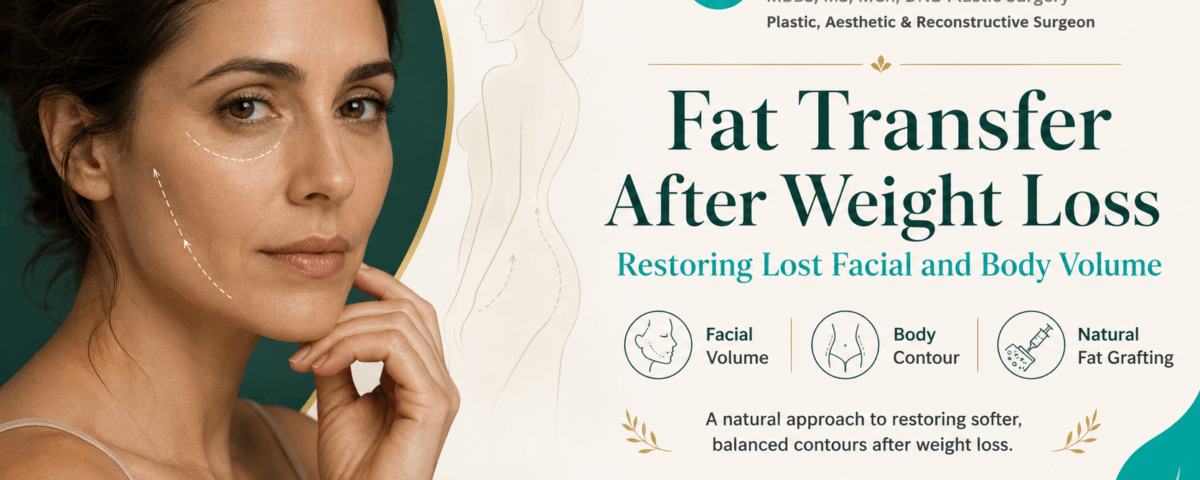
Fat Transfer After Weight Loss: Restoring Lost Facial and Body Volume
Weight loss can be life-changing in the best way, but for many people it also brings an unexpected concern: looking more hollow, tired or deflated in certain areas of the face and body. The cheeks may appear flatter, the temples more hollow, the under-eye area more tired, and some body areas may seem less balanced than before. In selected patients, fat transfer can help restore softer, more natural-looking volume using your own fat.
Who should read this blog?
- People who look hollow after major or moderate weight loss
- Patients exploring facial fat transfer in Mumbai
- Men and women wanting natural volume restoration
- Anyone comparing fat transfer with fillers or implants
Why Volume Loss Happens After Weight Loss
When people think about weight loss changes, they usually expect smaller measurements, better body proportions and healthier energy levels. What they often do not expect is the loss of soft tissue fullness in areas that previously gave the face and body a healthier, more youthful appearance.
Fat is not lost only from the abdomen, thighs or arms. It is also lost from the face and from other areas that contribute to contour and shape. This is why some people feel that after successful weight loss, their clothes fit better but their face looks older, more drawn, or less vibrant than before.
Facial hollowing
Cheeks, temples and under-eye areas may appear flatter or more tired after fat loss.
Body contour loss
Some areas may lose softness or shape, even after the body becomes fitter overall.
Natural restoration option
Fat transfer uses your own fat to restore volume in selected areas with a softer, more natural feel.
What Is Fat Transfer?
Fat transfer, also called fat grafting or fat injection, is a procedure in which fat is removed from one area of the body, processed carefully, and then placed into another area that needs more volume. The goal is not simply to fill a space, but to improve contour, softness and balance.
Because the transferred material comes from your own body, many patients are drawn to it as a natural option for restoring volume rather than relying only on synthetic fillers or implants in certain situations.
Which Areas Commonly Lose Volume After Weight Loss?
The exact pattern varies from person to person, but some common areas include:
- Cheeks
- Temples
- Under-eye or tear trough region
- Lower face fullness
- Hands in some patients
- Breasts after major weight change
- Buttock or hip contour in selected body-shape cases
Not everyone needs volume restored in all these areas. The right approach depends on where the loss is visible and whether restoring fullness would genuinely improve balance.
Who May Benefit from Fat Transfer After Weight Loss?
Patients often consider fat transfer when they have reached a relatively stable weight and are happy with the weight-loss result overall, but feel that certain areas now look too hollow, flat or deflated. They may say things like:
- “My face looks older after weight loss.”
- “My cheeks disappeared.”
- “I look tired even when I’m not.”
- “My body is slimmer, but some curves or softness are gone.”
In such cases, fat transfer may be discussed as a volume-restoration option rather than a weight-loss procedure.
Fat Transfer for the Face vs the Body
Facial fat transfer
Facial fat transfer is usually about subtlety. The aim is to soften hollowness, restore contour and reduce the tired or gaunt appearance that can happen after weight loss. The best results usually look refreshed rather than obviously “filled.”
Body fat transfer
Body fat transfer is more contour-focused. Depending on the patient, it may be considered to improve proportion, smooth transitions, or restore shape in areas that lost volume with weight reduction.
Concerned about looking hollow after weight loss?
A detailed consultation can help determine whether fat transfer may be suitable for restoring facial or body volume in a natural-looking way using your own fat.
Why Patients Like the Idea of Using Their Own Fat
One of the main reasons patients are interested in fat transfer is that it uses their own tissue. For many people, that feels more comfortable and more natural than using another material. It can also be appealing when there is some unwanted fat in one area and a need for volume in another.
That said, fat transfer is not just a simple “move fat from one place to another” procedure. It needs careful planning, harvesting, processing and placement technique.
Why Stable Weight Matters Before Fat Transfer
Fat transfer is generally considered more thoughtfully when weight is relatively stable. If a patient is still actively losing a significant amount of weight, the final contour may continue to change. This can affect both the donor area and the restored area.
Stability helps with better planning and more realistic expectations. Patients who have recently completed a major weight-loss journey often benefit from waiting until their body has settled before deciding on contour-restoration procedures.
Fat Transfer vs Fillers: What Is the Difference?
Both fillers and fat transfer may be used for volume restoration, but they are not the same. Fillers are office-based injectable products often used for quicker and more limited correction. Fat transfer is a procedure using your own fat and may be considered when a broader or more natural tissue-based approach is preferred.
The right choice depends on the area, the amount of volume needed, the patient’s goals, and whether the concern is facial only or involves body contour as well.
| Question | Fat transfer | Fillers |
|---|---|---|
| What is used? | Your own body fat | Injectable filler material |
| Best for? | Selected facial or body volume restoration cases | Smaller-volume facial correction in selected patients |
| Procedure type | Harvesting + processing + transfer | Office-based injection approach |
| Natural tissue feel | Often preferred for being your own tissue | Depends on product and area treated |
| Suitability | Depends on weight stability, donor fat and goals | Depends on area, amount needed and maintenance preference |
What Happens in a Fat Transfer Consultation?
A consultation usually focuses on where volume loss is happening, whether the weight is stable, how much correction is actually needed, and where donor fat may be available. The surgeon also looks at skin quality, contour balance and whether fat transfer is the right choice or whether another option may make more sense.
In facial cases, the discussion often includes cheeks, temples, under-eye hollowness and overall facial proportions. In body cases, it is more about shape, transitions and restoring fullness where it has been lost.
What Kind of Result Should You Expect?
The most satisfying fat transfer results usually do not look dramatic or artificial. They look healthier, softer and more balanced. People may notice that the face looks less drawn or that the body contour appears more complete, without immediately identifying exactly what changed.
The goal is not to make a patient look “filled.” It is to restore what weight loss may have taken away in a selective, proportionate way.
Is Fat Transfer Right for Everyone After Weight Loss?
No. Not every post-weight-loss concern needs fat transfer. Some patients are bothered more by loose skin than by volume loss. Others may need lifting, tightening or contour correction rather than added fullness. This is why evaluation matters so much.
In the right patient, however, fat transfer can be a thoughtful way to restore softness and improve confidence after a major transformation journey.
Book a consultation with Dr. Tushar Thorat
If you have lost weight and now feel that your face or body looks more hollow than you expected, a personalized consultation can help you understand whether fat transfer may be worth considering.
- Call: +91 98332 81190
- Call: +91 81694 29044
- Book online: Request an Appointment
What About Recovery?
Recovery depends on the area treated, the amount of fat harvested and where the fat is placed. Facial fat transfer recovery is different from body contour restoration, and the degree of swelling can vary. A recovery plan should always be discussed based on the specific treatment area and your overall health.
Frequently Asked Questions
Weight loss can reduce fat not only from the body but also from the cheeks, temples and other facial areas. This can make the face look more hollow or tired even when the health result is positive.
It may be used in selected patients to restore lost volume in the face or body where weight loss has created hollowness, flattening or a less balanced contour.
They serve different purposes. Fat transfer may suit patients wanting volume restoration using their own tissue, while fillers may be more suitable for certain smaller or office-based corrections.
In many cases, yes. Stable weight helps with better planning and more predictable contour-restoration decisions after weight loss.
Depending on the patient and the treatment plan, yes. Fat transfer may be considered for facial rejuvenation as well as selected body contour restoration needs.
That depends on whether the main issue is hollowing, skin laxity, contour imbalance or a combination. An in-person consultation helps identify the actual cause.