


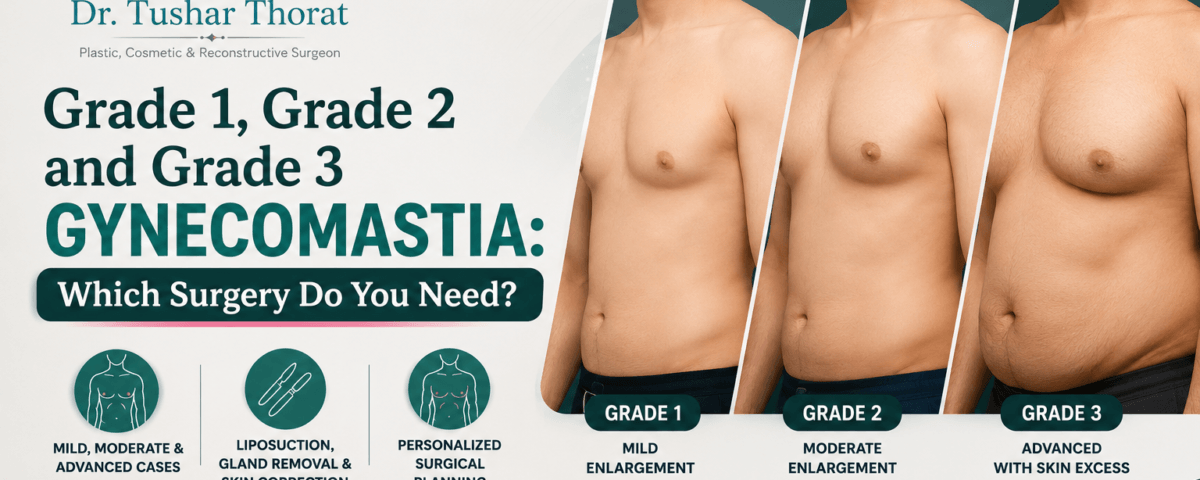
Grade 1, Grade 2 and Grade 3 Gynecomastia: Which Surgery Do You Need?
Gynecomastia surgery is not exactly the same for every patient. Some men have a small, localized chest swelling around the nipple area. Others have more visible fullness, loose skin, or a sagging chest shape after long-standing gynecomastia or weight changes. This is why gynecomastia is often discussed in grades. Understanding whether it is grade 1, grade 2 or grade 3 can help explain what kind of correction may be needed and why one surgical approach may suit one patient more than another.
Who should read this blog?
- Men trying to understand the grade of their gynecomastia
- Patients comparing liposuction, gland removal and skin tightening
- Those wondering why chest surgery differs from one case to another
- Anyone searching for gynecomastia surgery in Mumbai
Why Gynecomastia Grades Matter
Many patients assume gynecomastia is simply “extra chest fat.” In reality, male breast enlargement can involve gland tissue, fat, skin excess, or a combination of all three. Some cases are mild and mostly limited to the area behind the nipple. Others are more advanced and may show broader chest fullness or sagging.
That is where grading becomes useful. The grade helps the surgeon assess how much enlargement is present, whether the skin is tight or loose, and whether the correction is likely to need only liposuction, gland excision, or a more involved chest reshaping plan.
Grade 1
Mild chest enlargement, often localized, usually with no significant loose skin.
Grade 2
More noticeable enlargement with moderate fullness, sometimes extending beyond the areola area.
Grade 3
More advanced enlargement, often with skin excess or a sagging chest contour that may need more than simple removal.
What Is Gynecomastia?
Gynecomastia is enlargement of the male chest due to gland tissue, fat, or both. It can affect one side or both sides and may happen in teenagers, young adults, or older men. Some patients notice it as puffiness around the nipple. Others feel a firmer gland beneath the chest skin, or see a more feminine-looking chest contour in fitted clothing.
Not every enlarged male chest is the same. Some patients mainly have fatty fullness, while others have dense gland tissue that does not improve much even after weight loss or exercise.
Grade 1 Gynecomastia
Grade 1 gynecomastia is usually considered a mild form. The enlargement is limited and often centered around the nipple-areola area. The chest may not look enlarged from a distance, but the patient may notice puffiness in T-shirts, firmness under the nipple, or a rounded appearance that becomes obvious in certain clothing.
Common features of grade 1 gynecomastia
- Mild fullness around the areola
- Minimal chest enlargement overall
- No significant loose or hanging skin
- Often gland-dominant or mixed gland-and-fat pattern
In many grade 1 cases, the treatment may involve gland excision, often with or without liposuction depending on the exact chest contour. If the issue is mostly firm gland tissue, liposuction alone may not be enough.
Grade 2 Gynecomastia
Grade 2 gynecomastia is more noticeable. The chest fullness is greater than grade 1 and may extend beyond the nipple area. Some men notice that the chest looks rounder, heavier, or more visible even through regular shirts. In some cases, the skin still has decent elasticity. In others, there may be early looseness depending on body type and how long the gynecomastia has been present.
Common features of grade 2 gynecomastia
- Moderate chest enlargement
- More visible fullness across the chest
- May include gland, fat, or both
- Usually limited or mild skin excess
Grade 2 cases often require a combination approach. Liposuction may help contour the chest, but gland excision is commonly needed when there is dense tissue beneath the nipple or when the chest shape needs more definition.
Grade 3 Gynecomastia
Grade 3 gynecomastia is usually the more advanced end of the spectrum in this simplified grading discussion. The chest may look heavy, enlarged, or sagging, and the skin may no longer tighten well on its own after tissue removal. Some patients with long-standing gynecomastia or major weight changes fall into this category.
Common features of grade 3 gynecomastia
- Marked chest enlargement
- Possible skin excess or drooping
- Broader chest contour changes
- May need contour correction beyond basic removal alone
In grade 3 cases, surgery may still include liposuction and gland excision, but the key difference is that skin management may become more important. If the skin has stretched significantly, removing tissue alone may not always create the chest contour the patient hopes for.
Not sure what grade your gynecomastia is?
A proper consultation can help identify whether your chest fullness is mild, moderate or more advanced, and whether the concern is mainly fat, gland tissue or loose skin. That makes the surgical plan much more accurate.
Which Surgery Do You Need?
The surgery depends less on the label alone and more on what is actually present in the chest. That includes:
- How much fat is present
- How much gland tissue is present
- Whether the skin can contract well
- How stretched the chest skin is
- Whether the areola looks puffy or the lower chest looks heavy
Why Liposuction Alone Is Not Always Enough
This is one of the most common misunderstandings. Patients often hope that liposuction alone will flatten the chest. But if the major issue is dense gland tissue beneath the nipple, suction alone may not adequately remove that firmness or puffiness.
This is why some grade 1 and grade 2 cases still need gland excision even though the enlargement is not very large. The goal is not just volume reduction, but a flatter, more masculine chest contour.
What If You Also Have Loose Skin?
Loose skin becomes more important in grade 3 and in some heavier grade 2 cases. Younger patients with good skin tone may tighten better after tissue removal. But if the skin has stretched for a long time or after significant weight change, the skin may not fully contract on its own.
In such cases, the surgical plan may need to consider skin reduction or more extensive contouring depending on the chest shape. This is why advanced gynecomastia is often not treated in the same way as mild nipple puffiness.
| Grade | Typical chest pattern | Possible surgical approach |
|---|---|---|
| Grade 1 | Mild enlargement, often around the areola, no major loose skin | Gland excision with or without liposuction depending on contour |
| Grade 2 | Moderate enlargement, more visible fullness, limited or mild skin laxity | Usually combined liposuction and gland excision in selected cases |
| Grade 3 | Advanced enlargement, heavier chest, possible skin excess or drooping | More comprehensive correction, sometimes including skin management |
Can Exercise or Weight Loss Reduce the Grade?
Exercise and weight loss may help if fat is a major part of the chest fullness. But if gland tissue is the main issue, the grade may not improve much even after the rest of the body becomes leaner. This is why some men stay fit, exercise regularly, and still feel self-conscious about the chest.
Weight loss may improve contour in some patients, but it can also reveal loose skin more clearly in others. That is another reason why the right treatment depends on the individual chest anatomy.
What Happens During a Gynecomastia Consultation?
A consultation usually involves examining the amount of chest fullness, feeling for gland tissue, assessing fat distribution, checking skin tone, and understanding whether the enlargement is mild, moderate or advanced. Photos, clothing-related concerns and the patient’s fitness history also help guide planning.
The consultation is not only about “what grade is this?” It is about understanding what kind of correction will create the most balanced chest contour for that person.
When Should You Consider Surgery?
Patients often consider surgery when the chest shape continues to bother them despite exercise, weight control or long observation. Teenagers and younger men may wait for hormonal changes to settle, but persistent enlargement, embarrassment in clothing, or ongoing puffiness can lead patients to seek an evaluation.
Book a gynecomastia consultation with Dr. Tushar Thorat
If you want to understand whether your chest is grade 1, grade 2 or grade 3 gynecomastia, and which surgery may suit your case, a personalized consultation can help clarify the next step.
- Call: +91 98332 81190
- Call: +91 81694 29044
- Book online: Request an Appointment
Frequently Asked Questions
Grade 1 is usually mild and localized, grade 2 is more noticeable with moderate fullness, and grade 3 is more advanced with possible skin excess or sagging. The main difference is the amount of tissue and whether skin laxity is present.
Not always. It depends on how persistent the enlargement is, how much it bothers the patient, and whether the issue is mainly gland tissue that has not improved over time.
In some cases it may help, especially when fat is the main issue. But if dense gland tissue is present, liposuction alone may not fully flatten the chest.
More advanced cases, often grade 3 and some heavier grade 2 cases, may need skin management if the chest skin has stretched significantly.
Exercise may reduce fat, but it may not remove gland tissue. In some cases, weight loss can improve the chest, while in others it may make skin excess more noticeable.
The best way is through an in-person examination that assesses fat, gland tissue, skin tone and overall chest contour rather than relying on appearance alone.