
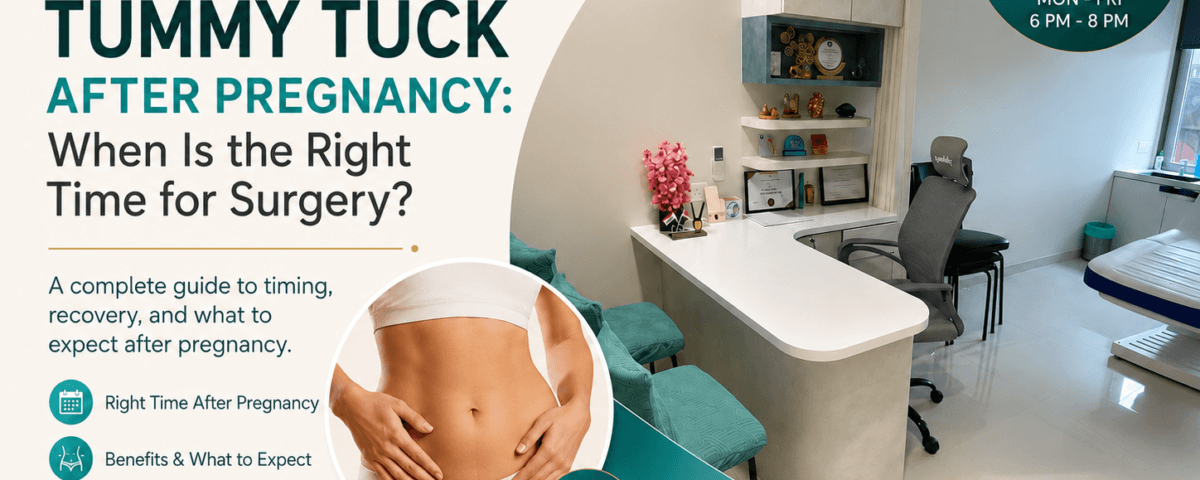
Tummy Tuck After Pregnancy: When Is the Right Time for Surgery?
Pregnancy changes the abdomen in ways that do not always reverse on their own. Some women notice loose skin, a hanging lower tummy, stretch marks on stretched skin, or a feeling that the abdominal wall no longer looks or feels the same even after returning close to their previous weight. This is why many patients ask not only whether they may need a tummy tuck, but also when the timing is actually right after pregnancy. The answer depends on recovery, weight stability, future pregnancy plans, and what kind of abdominal changes are present.
Who should read this blog?
- Women noticing loose abdominal skin after pregnancy
- Mothers unsure whether exercise alone will help
- Patients asking when tummy tuck timing becomes appropriate
- Anyone comparing body recovery now versus surgery later
Why Pregnancy Can Leave Lasting Changes in the Abdomen
Pregnancy stretches the skin, shifts the abdominal wall, and can change how the lower tummy looks and feels. While many women recover well with time, nutrition, movement and core rehabilitation, some changes may remain even after months of effort. This is especially true when there is excess loose skin, separated abdominal muscles, a lower abdominal overhang, or contour imbalance after one or more pregnancies.
That is why patients often say things like, “I lost the baby weight, but my stomach still doesn’t look or feel right,” or “My tummy is flatter in some areas but loose and hanging in others.” These concerns are common, and they do not always mean weight is the problem.
Loose skin
Pregnancy can stretch the abdominal skin beyond what it can fully recoil from, especially in the lower tummy.
Muscle separation
Some women develop abdominal wall separation, which can affect contour and core feel even after delivery.
Timing matters
The right time for surgery is usually after the body has had time to recover, weight has settled, and future pregnancy planning is considered.
What Is a Tummy Tuck?
A tummy tuck, or abdominoplasty, is a procedure designed to improve abdominal contour by addressing excess skin, lower tummy laxity, and in selected cases abdominal wall looseness. The goal is usually to create a flatter, smoother and more proportionate lower abdomen, not to replace general fitness or active post-pregnancy recovery.
Some patients need a full tummy tuck discussion, while others may have more limited skin concerns or need a different approach entirely. This is why consultation matters more than self-diagnosis.
Why You Should Not Rush Into Surgery Too Soon
One of the biggest mistakes is thinking about tummy tuck too early, when the body is still healing naturally after childbirth. The abdomen changes significantly in the first few months after delivery. Swelling reduces, tissues settle, skin may tighten to some extent, and core function may improve with time.
If surgery is considered too early, the final body pattern may still be changing. That can make evaluation less reliable and decision-making premature.
So, When Is the Right Time After Pregnancy?
There is no single number of months that suits every patient. In general, women are usually better off considering tummy tuck only after:
- They have recovered well from delivery
- Their weight is reasonably stable
- The body is no longer in rapid postpartum change
- They have had enough time to see what improves naturally
- They are not planning another pregnancy soon
The key is not to rush. The abdomen should be assessed after a realistic recovery period, not during the most actively changing stage of postpartum healing.
Unsure whether your abdominal changes are still recovering or need evaluation?
A consultation can help determine whether your concern is likely to improve further with time, weight stabilization and core recovery, or whether surgical contour correction may be worth discussing.
What If You Plan Another Pregnancy?
This is one of the most important questions. If a woman is planning another pregnancy in the near future, tummy tuck is often better postponed. Another pregnancy can stretch the skin and abdominal wall again, which may affect the surgical result.
This does not mean a woman can never have a healthy pregnancy after tummy tuck, but from a planning perspective, many patients prefer to wait until family completion or until future pregnancy plans are clearer.
Can Exercise Alone Fix the Post-Pregnancy Tummy?
Exercise is important, but it does not fix every post-pregnancy abdominal change. It can help with fitness, strength, posture, and reducing general body fat. But it cannot remove stretched excess skin or fully correct skin overhang. In some women, core work also helps function but does not fully address the visible contour concern.
This is why women who are healthy, active and near their goal weight may still feel unhappy with the abdominal appearance.
Common Signs That It May Be Worth Discussing a Tummy Tuck
- Loose skin that hangs or folds in the lower abdomen
- A persistent “pouch” despite weight loss and exercise
- Abdominal contour changes after one or more pregnancies
- Difficulty feeling comfortable in fitted clothes
- Stretch marks concentrated on loose lower abdominal skin
- A sense that the abdomen looks different from the rest of the body even after recovery
Why Weight Stability Is So Important
Patients often want to know whether they should first lose all the desired weight before surgery. In most cases, it is better to be near a stable, realistic weight rather than planning surgery while still actively losing a significant amount. Continued weight change after surgery can alter the contour again.
The best results usually come when the abdomen is being assessed in a relatively stable body condition, not in a phase of ongoing major change.
| Patient situation | Why timing may not be ideal yet | Why waiting may help |
|---|---|---|
| Very early after delivery | The body is still healing and changing naturally | Allows tissues and contour to settle more clearly |
| Still losing significant weight | Body shape may keep changing | Helps surgical planning reflect a more stable contour |
| Planning another pregnancy soon | Future stretching may affect the result | Can preserve the long-term value of surgery |
| Unsure whether concern is skin or fat | Wrong expectations may lead to poor decision-making | Consultation clarifies the actual issue |
Can You Have a Tummy Tuck If You Had a C-Section?
Yes, many women asking about tummy tuck after pregnancy have had a C-section. But the question is not simply whether a C-section scar exists. What matters more is how you healed, the current abdominal contour, skin quality, lower tummy fullness, scar behavior and overall tissue condition. This is exactly why individual examination matters.
What About Breastfeeding?
This is another reason many women choose not to think about surgery too early. During breastfeeding, the body is still going through physical and hormonal adjustment. Practical recovery planning may also be harder while caring for a very young baby.
In many cases, women prefer to wait until breastfeeding is completed and routines are more manageable before planning surgery seriously.
What Happens During a Tummy Tuck Consultation?
A consultation usually focuses on skin laxity, lower abdominal overhang, muscle separation history, scar pattern, weight stability, childbirth history and future pregnancy plans. The surgeon also assesses whether the concern is mainly due to loose skin, residual fat, contour imbalance, abdominal wall looseness or a combination.
This is the stage where patients often realize that the question is not only “Do I need a tummy tuck?” but also “Is now the right time?”
Book a tummy tuck consultation with Dr. Tushar Thorat
If you are bothered by post-pregnancy abdominal changes and want to understand whether your body is ready for evaluation, a personalized consultation can help you decide with more clarity.
- Call: +91 98332 81190
- Call: +91 81694 29044
- Book online: Request an Appointment
What Kind of Result Should You Expect?
The best tummy tuck results after pregnancy usually look smoother, flatter and more proportionate to the rest of the body. But the goal should be realistic. Surgery is not about returning every abdomen to a pre-pregnancy teenage version. It is about improving contour where pregnancy has left skin and shape changes that do not respond well to time or exercise.
Frequently Asked Questions
It is generally better to consider tummy tuck only after the body has had time to recover, weight is stable, and postpartum changes have settled enough for a meaningful assessment.
In many cases, yes. If another pregnancy is planned soon, waiting is often the better option because future stretching can affect the surgical result.
Exercise can improve strength, posture and fitness, but it does not usually remove significant stretched loose skin or lower abdominal overhang.
Yes, many women who consider tummy tuck after pregnancy have had a C-section. Suitability depends more on healing, scar pattern, tissue condition and overall abdominal findings.
It is usually better to be near a stable, realistic weight rather than planning surgery while still actively losing a significant amount of weight.
The best way is through consultation, where postpartum recovery, future pregnancy plans, weight stability and abdominal contour are assessed together.