Uncategorized
When it comes to enhancing facial harmony, the nose plays a starring role. Rhinoplasty, commonly known as a “nose job”, has been a go-to cosmetic procedure for decades. But if the thought of breaking nasal bones makes you uneasy — there’s good news.
Ultrasonic Rhinoplasty is here, and it’s changing everything.
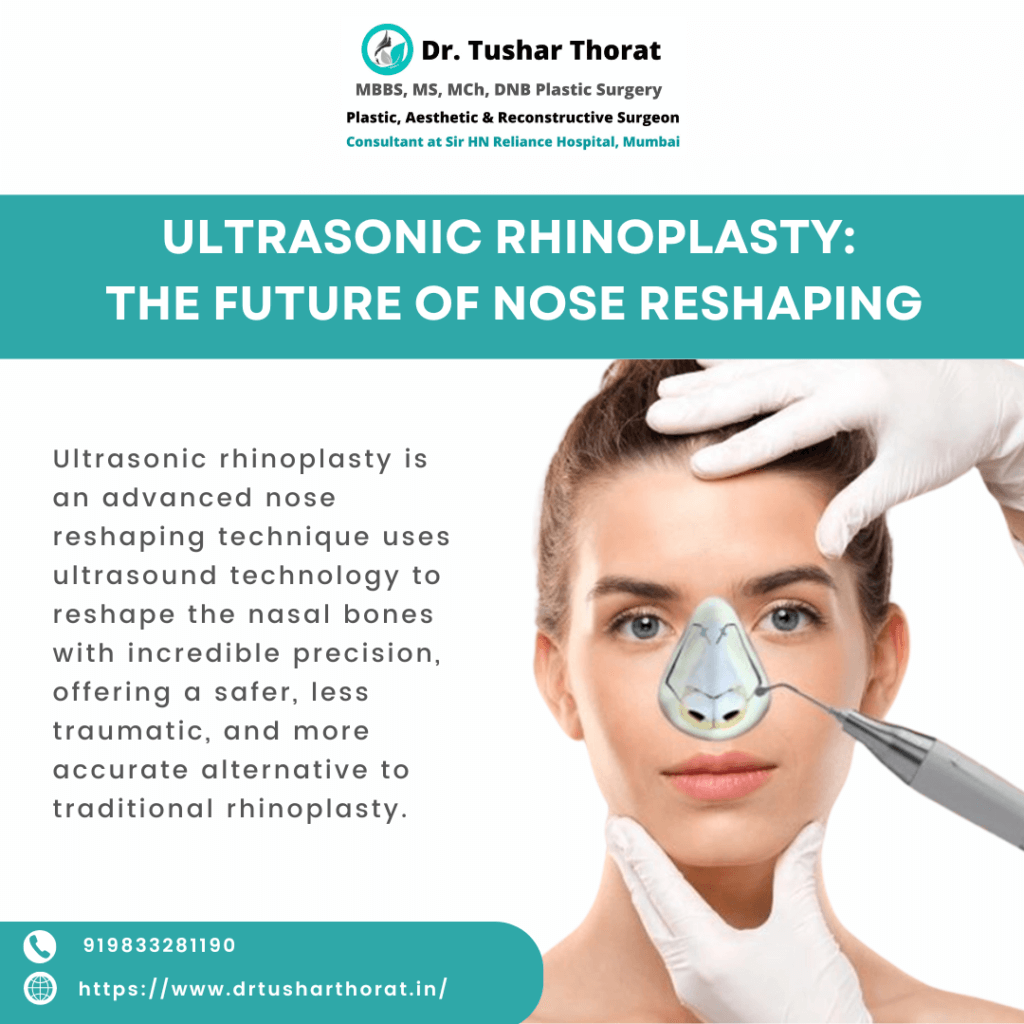
This cutting-edge technique uses ultrasound technology to reshape the nasal bones with incredible precision, offering a safer, less traumatic, and more accurate alternative to traditional rhinoplasty.
What is Ultrasonic Rhinoplasty?
Ultrasonic rhinoplasty is an advanced nose reshaping technique that uses a device called a piezoelectric scalpel. Unlike traditional methods that involve chisels and hammers, this device emits ultrasonic vibrations to sculpt the bone smoothly and gently.
- No bone fractures
- Minimal bruising & swelling
- Faster recovery
- Greater control for the surgeon
Why Patients Are Choosing Ultrasonic Rhinoplasty
Less Bruising, Faster Recovery
Since the bones aren’t broken with force, the surrounding soft tissues and blood vessels are preserved — leading to minimal swelling and bruising post-surgery. Most patients are back to work within 7–10 days.
Increased Precision, Better Results
Ultrasonic tools allow millimeter-level precision, meaning Dr. Tushar can shape the nose with much more control, especially in complex cases like crooked noses or previous surgery revisions.
Minimally Invasive Approach
The procedure is typically done using closed rhinoplasty (no external scars), making it ideal for those who want subtle and natural-looking enhancements.
Is Ultrasonic Rhinoplasty Right for You?
This method is ideal if:
- You’re looking for natural, refined nose reshaping
- You have a crooked or deviated nose
- You’ve had a previous nose surgery and want a correction
- You’re worried about downtime and visible bruising
If you’re in Mumbai or surrounding areas, Dr. Tushar Thorat offers personalized consultations to help determine if ultrasonic rhinoplasty is right for your goals.
How It Works – A Simple Breakdown
-
Consultation
Digital imaging is used to simulate results and plan the surgery. -
Surgery Day
Under general anesthesia, the ultrasonic device is used to sculpt bones precisely — no breaking, no hammering. -
Recovery
Swelling peaks by Day 2–3, but most of it subsides within a week. You’ll see visible improvement in 2–3 weeks, with full results in 3–6 months.
Ultrasonic vs Traditional Rhinoplasty – Quick Comparison
| Feature | Ultrasonic Rhinoplasty | Traditional Rhinoplasty |
|---|---|---|
| Bone sculpting method | Piezoelectric ultrasound | Manual chisel/hammer |
| Bruising & swelling | Minimal | Significant |
| Recovery time | Faster (7–10 days) | Longer (2–3 weeks or more) |
| Surgical precision | Very high | Moderate |
| External scarring | Usually none (closed method) | May have slight scarring |
FAQs: What People Are Asking Online
Q. Is ultrasonic rhinoplasty painful?
No, it’s performed under anesthesia, and post-surgery discomfort is minimal.
Q. Is it more expensive than traditional rhinoplasty?
Yes, slightly. But the benefits in precision and recovery often justify the cost.
Q. Will it leave scars?
Most ultrasonic rhinoplasty procedures are done through internal incisions, leaving no visible scars.
Q. Is it safe?
Absolutely. It’s one of the safest innovations in cosmetic surgery, especially in the hands of an experienced surgeon like Dr. Tushar.
The Future is Gentle, Precise, and Beautiful
Ultrasonic rhinoplasty isn’t just a trend — it’s the future of cosmetic nose surgery. If you’re considering rhinoplasty but worried about pain, scars, or a long recovery, this modern technique may be your perfect match.
Want to Know More?
Visit Dr. Tushar Thorat’s clinic in Mumbai for a personalized consultation.