

Immediate vs Delayed Breast Reconstruction: Which Option Is Right After Mastectomy?
For many women facing mastectomy, the conversation is not only about cancer treatment. It is also about how and when breast reconstruction fits into recovery, body image, comfort, and long-term confidence. One of the most important decisions is whether reconstruction should be done immediately at the time of mastectomy or later in a delayed stage. This guide explains the difference in simple terms and helps patients understand what may influence the right choice.
Who should read this blog?
- Women planning mastectomy and exploring reconstruction options
- Patients comparing immediate vs delayed breast reconstruction
- Families looking for clarity before cancer surgery
- Anyone wanting to understand timing, recovery, and suitability
Understanding the Timing of Breast Reconstruction
Breast reconstruction after mastectomy can often be planned in two broad ways. Immediate reconstruction is done during the same operation as the mastectomy. Delayed reconstruction is done later, after the mastectomy has healed and sometimes after additional cancer treatment such as chemotherapy or radiation.
Both approaches can be valid. The better option depends on cancer-related factors, expected treatments, medical fitness, tissue condition, personal comfort, and the kind of reconstruction being considered. The goal is not to force one timeline for every patient, but to choose the timing that is safest and most appropriate for the individual.
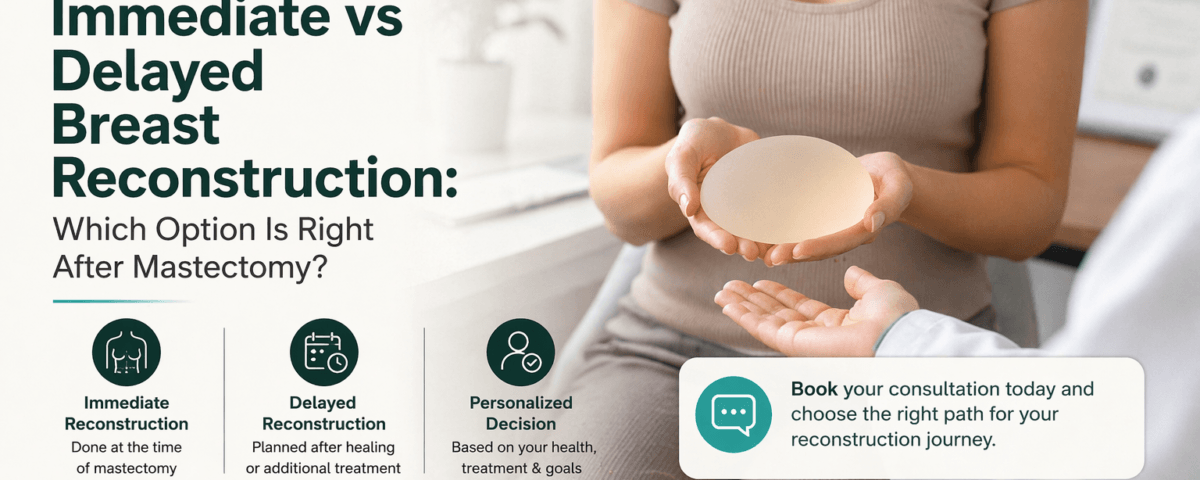
Immediate reconstruction
Done at the same time as mastectomy, reducing the feeling of waking up without a breast shape.
Delayed reconstruction
Done later when cancer treatment and recovery have progressed, offering more planning time.
Personalized decision
Based on oncologic safety, radiation plans, body type, healing needs, and patient preference.
What Is Immediate Breast Reconstruction?
Immediate breast reconstruction is performed during the same operation as the mastectomy. Once the breast tissue is removed, reconstruction begins in the same surgical sitting. Depending on the case, this may involve implant-based reconstruction, tissue expander placement, or autologous reconstruction using the patient’s own tissue.
Many patients choose this approach because it combines cancer surgery and reconstruction planning into a single pathway. It may also reduce the emotional impact of losing the breast shape after mastectomy.
What Is Delayed Breast Reconstruction?
Delayed breast reconstruction is planned after the mastectomy has already been completed. This may be weeks, months, or sometimes longer later, depending on cancer treatment, healing, and patient readiness. It is often considered when radiation is expected, when the body needs time to recover, or when immediate reconstruction is not medically ideal.
Delayed reconstruction can still provide meaningful restoration of breast shape and symmetry. For some women, having more time to think, heal, and understand the next step can make this approach feel more comfortable.
Why Timing Matters After Mastectomy
The decision is important because timing can affect surgical planning, scars, recovery stages, and how future cancer treatment interacts with reconstruction. For example, radiation therapy may influence how tissues heal and how certain reconstruction methods behave over time.
This is why breast reconstruction planning usually involves more than one specialist. The plastic surgeon and cancer treatment team should align on whether reconstruction can be done immediately or whether delayed planning is more appropriate.
Planning breast reconstruction after mastectomy?
A detailed consultation can help you understand whether immediate or delayed reconstruction may suit your treatment plan, body type, and recovery goals. The decision should be individualized and made with clarity.
Possible Benefits of Immediate Reconstruction
- Breast reconstruction begins at the same time as mastectomy
- May reduce the emotional impact of breast loss for some patients
- May reduce the number of major surgeries in selected cases
- Can allow earlier planning of symmetry and breast shape
- Often preferred by women who want a more continuous treatment journey
However, these benefits must always be weighed against medical safety and upcoming treatment needs.
Possible Benefits of Delayed Reconstruction
- Allows cancer treatment to remain the first priority without added timing pressure
- May be helpful when radiation is planned or strongly likely
- Gives the body time to heal after mastectomy
- Can offer more decision-making time for women still processing the diagnosis
- May help with surgical planning when tissue condition needs reassessment later
What Factors Influence the Choice?
The decision between immediate and delayed reconstruction usually depends on a combination of medical and personal factors, such as:
- Type and stage of breast disease
- Whether radiation therapy is expected
- General health and healing capacity
- Smoking history or other factors affecting wound healing
- Whether implant-based or tissue-based reconstruction is being considered
- Patient comfort, emotional readiness, and family support
- Skin and chest wall condition after mastectomy planning
| Question | Immediate reconstruction | Delayed reconstruction |
|---|---|---|
| When is it done? | Same operation as mastectomy | After mastectomy, at a later stage |
| Useful when? | When oncologically appropriate and timing allows | When more healing time or additional cancer treatment is needed |
| Emotional aspect | May reduce the experience of waking up without breast shape | May feel better for women who need time before the reconstructive step |
| Planning flexibility | Combined planning during cancer surgery | More time for staged planning and recovery |
| Radiation consideration | Needs careful coordination if radiation is expected | Often considered when radiation may affect immediate plans |
How Radiation Therapy Affects Reconstruction Timing
Radiation is one of the most important factors in this decision. Radiation can affect skin quality, soft tissue behavior, healing, and long-term reconstruction appearance. This does not mean reconstruction cannot be done if radiation is part of treatment, but it does mean timing and technique must be planned carefully.
In some patients, delayed reconstruction may be preferred if radiation is strongly expected. In others, a staged approach may be considered. This is exactly why breast reconstruction should never be planned in isolation.
Does the Type of Reconstruction Change the Timing Decision?
Yes. The choice between implant-based reconstruction and autologous tissue reconstruction can influence timing. Some women may be more suitable for implant-based reconstruction in a staged pathway, while others may be candidates for tissue-based reconstruction using abdominal or other donor tissue.
The right option depends on anatomy, treatment needs, available tissue, scarring, previous surgeries, and overall goals. In many patients, the timing decision and the reconstruction-method decision are closely connected.
Emotional Readiness Matters Too
A breast cancer diagnosis can make decision-making feel overwhelming. Some women know immediately that they want reconstruction as part of the mastectomy journey. Others prefer to focus first on cancer treatment and think about reconstruction later. Both reactions are understandable.
Choosing delayed reconstruction does not mean giving up on reconstruction. It simply means the timing is being adapted to the patient’s medical and emotional needs.
Who May Lean Toward Immediate Reconstruction?
- Women whose treatment plan allows safe same-stage reconstruction
- Patients who want breast restoration to begin with mastectomy
- Cases where radiation is not expected or timing is clearly coordinated
- Women who are medically fit for a combined surgical plan
Who May Lean Toward Delayed Reconstruction?
- Women likely to need radiation or additional treatment planning
- Patients who need time to recover physically or emotionally
- Cases where immediate reconstruction is not ideal due to medical factors
- Women who want more time to understand reconstruction choices fully
What Happens in a Breast Reconstruction Consultation?
A consultation usually focuses on the mastectomy plan, expected treatments, body type, available reconstructive options, likely scars, recovery stages, and overall suitability. It is also the time to discuss timing honestly. Some patients arrive thinking immediate reconstruction is always better, while others assume delayed reconstruction means compromise. In reality, both options can be appropriate depending on the case.
Patients often find it helpful to ask how radiation may influence the plan, what method of reconstruction may suit them, what recovery may involve, and how many stages may be needed.
Book a breast reconstruction consultation with Dr. Tushar Thorat
If you or a loved one is facing mastectomy and wants clarity on reconstruction timing, a personalized consultation can help you understand your options in a calm, structured way.
- Call: +91 98332 81190
- Call: +91 81694 29044
- Book online: Request an Appointment
Frequently Asked Questions
Not always. Immediate reconstruction may be suitable for some women, but delayed reconstruction may be safer or more practical in others, especially when cancer treatment or healing factors need priority.
Yes. Delayed reconstruction is a valid option and can be planned after mastectomy once healing and treatment considerations are clearer.
It can. Radiation may influence tissue healing and long-term reconstructive planning, which is why the cancer treatment plan and reconstruction timing should be coordinated carefully.
Not necessarily. The result depends on many factors, including the reconstructive method, tissue condition, and surgical planning. Delayed reconstruction can still provide meaningful restoration and symmetry.
The best way is through a personalized consultation that considers your cancer plan, medical fitness, expected treatment, body type, and personal preference.